Ripfumelo Mabasa

By Siya Jele, TUHF Regional Manager for KwaZulu Natal

The increase in Grade A office and commercial developments, such as Waterfall City in Midrand and Menlyn Maine in Pretoria, has led companies to migrate from traditional office nodes to newer, more environmentally sustainable office buildings. This leaves historic commercial nodes underutilised, creating opportunities for property entrepreneurs to convert buildings into high-density residential assets.

As pressure mounts regarding the shortage of affordable housing in urban areas, compounded by high commercial vacancy rates and the growing built-to-rent residential subsector, municipalities are more inclined to approve high-density redevelopments. New investment into these urban areas has a positive fiscal impact for the municipality, as their rates and taxes collections improve. For property entrepreneurs, municipalities’ willingness to approve refurbishments and rezoning applications presents an opportunity to reimagine obsolete buildings as high-value assets.

When the repurposing profile makes commercial sense

The most interest in building reuse is in C Grade office conversions, where existing infrastructure and access to amenities like transport hubs support redevelopment for housing and mixed-use projects.

Underutilised hospitality buildings are also attracting attention, because their existing structure is well-suited to high-density housing conversions. 

Additionally, well-located light industrial warehouses that are close to Central Business Districts (CBDs) are attractive, as some of the original building designs lend themselves to easy conversion for residential purposes. Depending on location, mixed-use developments that incorporate retail or personal services make good business sense as they add amenities to the node.

A national view of the adaptive use movement

Johannesburg is currently leading the charge. The city’s inner-city suburbs, as well as Rosebank, and Sandton are at the forefront of office‑to‑residential conversions, where older C‑Grade offices and mixed‑use properties are being transformed into student housing and affordable rental apartments. This trend reflects both the scale of vacancy in Johannesburg and the urgent demand for accessible urban living.

Cape Town presents a different dynamic. With lower vacancy rates and stronger fundamentals in its CBD, traditional office conversions are limited. Instead, developers are repurposing light warehouses and peripheral commercial sites in areas such as Salt River, Observatory, and the City Bowl. These projects are reshaping outdated industrial spaces into high‑yield residential complexes and co‑living hubs, aligning with Cape Town’s lifestyle‑driven market and focus on community‑oriented living.

Similarly, KwaZulu-Natal (KZN) is seeing targeted investment in adaptive reuse, primarily concentrated in Durban’s inner-city, Berea, and Pinetown. We are also seeing growing interest in areas like La Lucia, Umhlanga, Ballito. Unlike Gauteng or the Western Cape, KZN’s conversion market is narrower. It focuses heavily on affordable student accommodation and social housing, while its warehouse market follows a strictly commercial path.

Furthermore, metros like Tshwane and Nelson Mandela Bay are also emerging as important hubs of conversion activity. In Tshwane, Hatfield, Centurion, and the Pretoria CBD are seeing targeted projects, while Gqeberha in Nelson Mandela Bay is experiencing conversions around manufacturing zones and older commercial nodes.

Together, these regions highlight how adaptive reuse is spreading beyond Johannesburg, supporting urban renewal and diversifying housing supply across South Africa’s metropolitan landscape.

Sound future-proofed commercial vision

In our experience, many property entrepreneurs are leaning towards a precinct approach to redevelopment. The approach allows the entrepreneur to exert influence over the revitalisation of the whole node by investing in multiple building refurbishments on the same block.

Precinct approaches give the entrepreneur influence over other factors that impact building value, such as safety and security, cleanliness, or access to technology like public WiFi. Including retail space or additional secure parking in the precinct improves residents’ access to amenities, while forming central improvement districts with other landlords in the area to invest in security and cleaning initiatives helps to reduce crime. These improvements benefit the node as a whole, so that entrepreneurs can attract and retain good tenants.

The power of reinventing underutilised buildings in this way lies in densification that doesn’t lead to overpopulation of urban nodes. Decent, more modern, affordable housing and improved existing infrastructure attracts new investment into these nodes such that lives and livelihoods are improved, while the city increases its revenue collections.

The approach is beneficial to the whole value chain – from tenants living, working and playing in the area, to the municipality itself, to the entrepreneurs and investors who benefit from improved rentals and growing investments.

Challenges do exist

In cities with special planning commitments – such as industrial development zones or areas earmarked for social services like education or healthcare – redevelopment can be challenging. Though rezoning has become easier to achieve in certain markets, the challenge often lies in the surrounding buildings.

For example, a residential development surrounded by industry may struggle to attract tenants. This necessitates a precinct approach to create a residential hub and change public perceptions about the area. Precinct redevelopments require a large upfront capital investment to buy up enough property to secure critical mass and shift perceptions.

Entrepreneurs with vision need to secure funding and support to bring their precinct vision to life. Overcapitalisation can be a risk, as it can be challenging to balance upfront capital investment against long-term returns. For smaller entrepreneurs, getting this balance right is critical to the project’s long-term success, and conveying the vision to traditional financial institutions isn’t always easy. Working with partners that understand the entrepreneur’s vision and are willing to invest in it is key.

The design of the existing building can present a challenge, too, both in terms of plan approvals and maximising the repurposed space. Working with an experienced team that specialises in adapting existing structures can help to eliminate structural integrity risks and minimise dead space in the reconfigured building. The ideal outcome is a building that maximises revenue-generating space and incorporates new and appropriate amenities for residential tenants.

Building sustainably adds short and long-term value

The kinds of amenities that add value and make commercial sense include sustainable building interventions, like energy and water efficiency fixtures as a base level, to considering onsite renewable energy and water storage solutions to minimise the impacts of grid outages.

We’re seeing an increase in entrepreneurs seeking green building certifications, like EDGE, for housing developments. This is partly because the technology required to achieve certification makes commercial sense for them and their tenants, and partly because these certifications can help unlock more funding opportunities.

Our partnership with the IFC, for example, gives clients access to financial assistance to offset the upfront greening investment in the form of a rebate into their loan account. There are long-term benefits as well, as tenants save on utilities due to energy and water efficiency measures.  

Reimagining obsolete buildings as high value assets presents promising growth opportunities for the entrepreneurs themselves and has a positive impact on the surroundings. They modernise infrastructure and play a significant role in attracting new capital investment into the precinct. 

Reimagining obsolete buildings as high value assets Read More »
TUHF has reached an important milestone in its journey towards deeper environmental, social and governance (ESG) tracking and reporting, using a new Environmental and Social Management tool developed with support from the Proparco-implemented and European Union-funded “Crisis Emergency Response Technical Assistance Facility” (CERTAF), a technical assistance facility available to financial institutions in Sub-Saharan Africa and EU neighbourhood countries.  

Following the implementation of a CERTAF-supported Environmental and Social Management System (ESMS), TUHF is now better equipped to manage its ESG strategy, with a heightened focus on environmental and social impact.  

TUHF’s ESG strategy is supported by its drive to develop Excellence in Design for Greater Efficiencies (EDGE) certified projects, such as Remington House – the first flagship inner-city redevelopment project in Johannesburg’s CBD. EDGE is a World Bank Group-developed green building standard that verifies at least 20% reduction in energy, water, and embodied carbon in materials for new or existing buildings. With increasing numbers of EDGE certified projects, TUHF has demonstrated that environmental efficiencies are an important consideration for all new financed projects.  

The ability to EDGE-certify projects and the strengthened measurement and reporting capability of the ESMS amplifies TUHF’s role as an impact investor of choice in South Africa. 

Accurate measurement key to sustainable development 

TUHF’s ESMS tool is now used to assess environmental and social risk across TUHF-funded projects, with ESG integrated into TUHF’s systems so that every project undergoes ESG screening prior to credit approval. The technical assistance provided by Proparco was instrumental in strengthening TUHF’s ESG integration and reporting capabilities. 

Commenting on the ESMS tool, Katherine Cox, Research & Development Impact Manager at TUHF21, says, “By strengthening TUHF’s ability to assess and manage environmental and social risk, this work enables us to demonstrate our impact to investors and funders. In turn, we are better enabled to offer finance to entrepreneurs to develop sustainable, affordable housing properties like Remington House, which contribute directly to inclusive urban development.” 

A project that reflects commitment to impact 

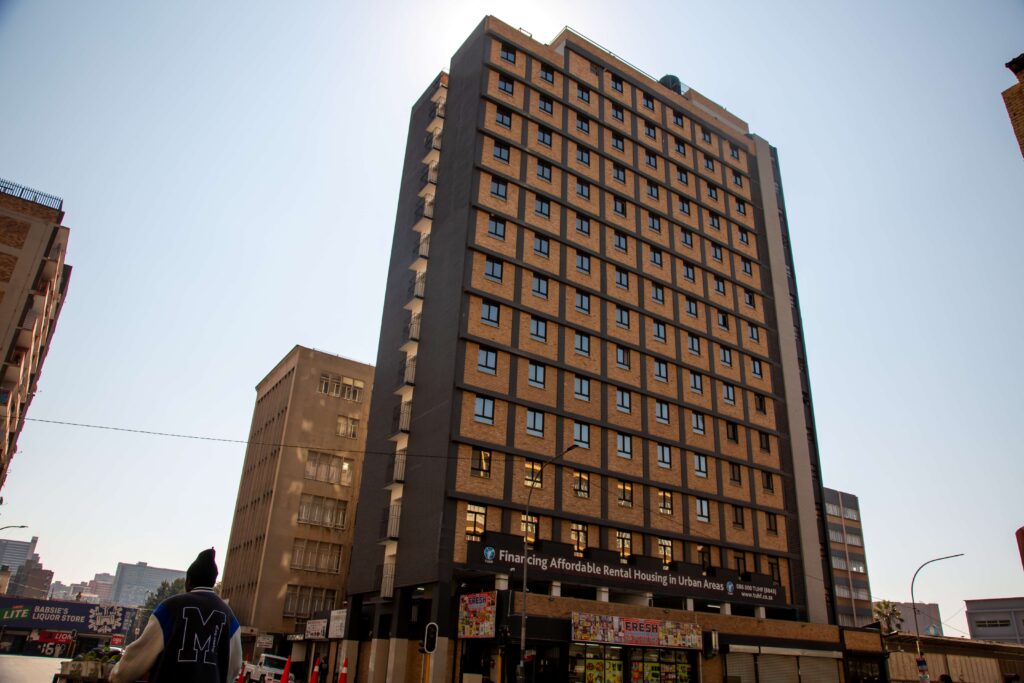
Remington House reflects TUHF’s long-standing commitment to impact-driven investment. The former office building on Nugget Street in Johannesburg’s Inner City had been abandoned and hijacked, with no functioning services and significant health and safety risks. Its central location near places of work and economic opportunity, transport hubs, public amenities, the CBD’s fashion district, and major universities presented an opportunity to deliver social, economic, and environmental impact with the added benefit of inner-city regeneration. 

“When the developer approached us, the building had been vacated, and they were seeking funding for redevelopment,” says Khumbulani Chikomo, Portfolio Manager at TUHF. “We had worked with this developer on a similar project before, so we knew they had the entrepreneurial capability. They had also invested their own money in the building’s clean-up efforts, demonstrating real commitment to the refurbishment. No banks would fund the project, but it’s right up TUHF’s alley.” 

Environmental and social outcomes 

TUHF’s intimate knowledge of the Johannesburg inner city, together with the developer’s proven track record in rental housing, supported the decision to fund the project. The refurbishment transformed a 1 000 m² hijacked building into a safe and compliant mixed-use development comprising six ground-floor retail units, over 120 residential units, and 40 secure parking bays, demonstrating the power of urban densification and efficient land use in well-located urban areas. 

The ground floor accommodates retail space for six shops, while the first floor provides 40 secure parking bays and houses centralised heat pumps that replace traditional high-energy- consuming geyser systems. Residential accommodation is distributed across a four-floor extension and a 16-floor tower, with single occupant units designed to maximise usable space, natural light and ventilation, as well as a penthouse on the top floor. Each unit includes a self-contained kitchenette and ablution facilities. 

Originally intended for family rentals, the building was later adapted to meet the demand for student accommodation, incorporating a study centre and gym after interest from nearby tertiary education institutions. The project forms part of a growing student precinct in the area, alongside other TUHF-funded developments, accommodating close to 1 000 students living and studying in and around the block. 

The Lasting Impact of Proparco’s TA Support 

The implementation of the ESMS, supported through Proparco’s CERTAF facility, not only strengthens TUHF’s internal environmental and social risk management—it also builds the organisation’s capacity to guide its clients through more advanced sustainability pathways, such as green building certification. Before the ESMS was introduced, TUHF had limited structured processes for assessing and tracking environmental performance across its portfolio. The new system created clear procedures, screening tools, and reporting requirements that enabled TUHF staff to identify opportunities for improved resource efficiency early in the project cycle. It also familiarised the team with IFC performance standards and green-building principles, which later proved essential in supporting clients through the IFC EDGE certification process. 

With the ESMS in place, Remington House served as TUHF’s first pilot project for EDGE certification under its partnership with the International Finance Corporation (IFC). Although the building works had commenced before the ESMS was formally implemented, the new system equipped TUHF with the internal tools and expertise needed to support the developer through the EDGE process—particularly in collecting technical data, identifying resource-efficiency measures, and coordinating IFC’s verification requirements. Through this collaboration, TUHF clients who achieve EDGE certification receive a rebate of USD 1,000 per residential unit, paid directly toward the loan settlement, helping offset certification costs, accelerate loan repayment and improve project efficiency. 

“It indicates that we are able to see a certification through,” says Khumbulani. “We’re proud of that. The greening also delivers tangible benefits for the entrepreneur, tenants, and the surrounding community.” 

The EDGE certification reflects significant efficiency gains, including energy savings of 28%, water savings of 22%, and a 51% reduction in embodied carbon through materials, achieved largely by reusing the building’s existing structural frame, concrete, and steel elements. Additional sustainability interventions include low-flow water fittings, dual-flush toilets, LED lighting throughout the building, energy-efficient heat pumps, solar backup power, and improved facade glazing to reduce heat gain and loss. 

Empowering SMEs with improved measurability 

“Proparco’s commitment to strengthening the capacity of financial institutions like TUHF to invest in sustainable development activities, particularly those led by SMEs, is strongly aligned with TUHF’s goals,” says Lusanda Netshitenzhe, CEO, TUHF21. “Both organisations share a focus on sustainable urban development and the socio-economic multipliers thereof.”  Remington House stands as a new benchmark for sustainable inner-city redevelopment and affordable housing, demonstrating that environmentally responsible building practices are both achievable and commercially viable in the affordable housing market.

Strengthening ESG Impact: TUHF’s Strategy for Sustainable Affordable Housing Read More »

By Letlatsa Lekhelebana, Client Coverage Regional Manager

Access to property ownership has long been one of the most reliable pathways to wealth creation. Yet for many aspiring homeowners and property entrepreneurs, the door to this market remains firmly closed. The issue is often a lack of accessible, flexible financing. Innovative finance plays a critical role in changing this reality, unlocking participation, and enabling both new entrants and established players to grow.

At its core, the property market depends on movement. New buyers enter, existing owners trade up, and investors expand portfolios. When this cycle slows, the entire ecosystem becomes constrained. Recent industry insights, like this whitepaper by Pepper Money, indicate that delays in financing innovation directly limit new entrants, reduce wealth creation, and ultimately lead to a less liquid and less productive market. The issue is an economic one, not just a question of home ownership.

For newcomers, the biggest barrier is affordability. Traditional mortgage models assume stable incomes, significant deposits, and predictable financial behaviour. But this does not reflect the reality for many South Africans, particularly younger professionals, informal earners, or first-time entrepreneurs. Without alternative pathways into the market, these individuals are locked out before they even begin.

Turning tradition on its head

This is where innovative finance becomes transformative. Solutions such as shared ownership, rent-to-own models, and blended finance structures are essential tools for inclusion. By lowering upfront costs, spreading risk, and aligning repayment structures with real income patterns, these models create practical entry points into property ownership.

For example, equity support mechanisms – where a funder co-invests in a property – can significantly reduce the deposit burden. Similarly, structured repayment models that evolve with a borrower’s income can make property investment viable for those with non-linear earnings. These approaches recognise that affordability is not just about price, but about how payments are structured over time.

These innovations achieve two things: they help individuals who may be overlooked in traditional financial models, and they strengthen the market itself. When more people can enter the property market, demand increases, liquidity improves, and confidence grows. Existing property owners benefit because there is a larger pool of buyers, making it easier to sell, refinance, or expand. In this way, innovative finance supports both ends of the spectrum: it opens doors for newcomers while enabling established investors to scale.

Knowledge truly is power

However, access alone is not enough. Financial literacy plays a crucial role in ensuring that participation is sustainable. A lack of knowledge around credit, risk, and long-term financial planning can lead to defaults, which harm both borrowers and lenders. Poor financial literacy increases the likelihood of financial distress and long-term exclusion from credit markets.

Innovative financiers recognise this risk and implement measures to support property entrepreneurs’ readiness to enter the market. Pre-purchase education, budgeting tools, and ongoing support are becoming essential components of responsible lending. Excellence in this space is no longer measured by the volume of loans issued, but by the long-term success of those loans. Sustainable portfolios are built on informed, prepared borrowers.

For property entrepreneurs, particularly those building portfolios or entering the affordable housing market, this shift presents a significant opportunity. Innovative finance models can provide access to capital that would otherwise be unavailable, while also offering more flexible terms that support growth. For example, public participation opportunities like Government’s First Time Homeowner support programme – where public and private funding are combined – can unlock projects that deliver both financial returns and social impact.

Bridging the equity gap

Innovative finance solutions should be mindful of the equity gaps that exist for many new property market entrants. Subsidy programmes and equity funds – like our Inthuthuko Equity Fund – can help bridge the gap for first-time buyers and emerging investors, reducing risk and encouraging broader participation. When stakeholders collaborate effectively, the result is a more inclusive and resilient property market.

Without innovation, the market will struggle to grow, with fewer new entrants and increasing pressure on existing participants. Younger generations will continue to enter the market later, if at all, while demand stagnates and confidence declines. Over time, this could lead to greater reliance on state-supported housing and increased strain on public resources.

But with the right approach, the opposite is possible. A market that embraces innovative finance can become more dynamic, inclusive, and sustainable. It can support a new generation of property entrepreneurs – individuals who not only build wealth for themselves but also contribute to addressing broader housing challenges.

Ultimately, opening up the property market is not about lowering standards or increasing risk. It is about rethinking how risk is shared, how affordability is structured, and how opportunity is distributed. Innovative finance is the bridge between potential and participation, and it is one of the most powerful tools we have to build a more accessible and thriving property sector.

The role of innovative finance in opening property market access Read More »

On Saturday, 28 March 2026, Sithembele Sidzumo and his team from Kaya Properties officially broke ground on Ubuntu Terrace 1. This is the first TUHF funded project to receive Affordable Rental Flats (ARF) approval in Cape Town, where the City of Cape Town has been engaging with micro-developers and property owners who aspire to meet the demand for affordable rental housing.

“Ubuntu Terrace 1 is not just a development,” said Nomfundo Molemohi, TUHF (uMaStandi) Client Coverage Consultant, Cape region. “It’s a powerful example of what it means to build with purpose and impact. It points the way forward for other entrepreneurs to develop safe, compliant, sustainable affordable housing solutions in Cape Town’s townships.”

The groundbreaking ceremony for Ubuntu Terrace 1 is particularly significant as it represents a watershed in township development. Though municipal by-laws, zoning requirements and complex, slow processes historically made it challenging for property entrepreneurs to receive approvals and gain traction, the City of Cape Town’s amendment to its Municipal Planning By-law is showing its effectiveness. The amendment came into effect on 1 September 2025 and was a big step towards unlocking affordable housing potential in the townships.

“This journey started in 2020,” Nomfundo says. “We wanted the City of Cape Town to recognise and support the township landlords who were already driving a quiet rental revolution. After years of back-and-forth discussions, expert input, and relentless advocating throughout the process, we are proud of the role uMastandi played to find solutions and promote affordable housing developments that comply with City regulations.”

Though not without its challenges, the approval process for Ubuntu Terrace 1 was smoothed by working through the newly established Local Planning Support (LPS) Office. Formed to assist developers with navigating the approval process for ARFs – and staffed by professionals such as architects and quantity surveyors – collaboration between the LPS, TUHF’s uMaStandi team and Kaya Properties made this project’s approval possible.

“The lesson is that it is important to liaise with the LPS team to ensure the process is correctly followed,” Nomfundo explains. “Working with the LPS also ensures the revised by-laws are correctly interpreted by both the professional team and the property entrepreneur.”

The first of many

City officials, including the Deputy Major of Cape Town, as well as the team from TUHF were present at the ground-breaking ceremony to support Sithembele and his team. Nomfundo believes that, now that it is simpler to comply with city by-laws and quicker to achieve plan approvals, more entrepreneurs are likely to come forward to invest in township property developments.

“Ubuntu Terrace 1 not only creates housing where it is most needed, but also creates opportunities, dignity and real change in the community,” Nomfundo says. “This milestone is just the beginning, for Kaya Properties and township property entrepreneurs in general.”

TUHF has already approved funding for two additional phases of Ubuntu Terrace. The three developments combined will create a safe, well-maintained precinct that not only provides decent affordable rental housing but stimulates the local economy and uplifts the neighbourhood and community. Compliant, sustainable developments like the planned Ubuntu Terrace precinct have a positive impact on property values, ultimately enabling families to build generational wealth from properties that could otherwise be considered dead equity.

“I’m excited to see the construction of Ubuntu Terrace unfold and to walk this journey with Sithembele and his team,” Nomfundo says. “Acknowledging the importance of compliance and taking the necessary steps to meet the guidelines is what makes quality property development in the townships. TUHF is ready to support entrepreneurs as they set out on their journeys to build successful property businesses.”

Breaking ground on significant first ARF construction in Cape Town Read More »

South Africa’s affordable housing sector is undergoing a structural shift that is shaped by changes in how cities are planning for growth, densification, and mixed-use integration. According to TUHF Client Coverage Executive, Velda Derrocks, inclusive development begins with how municipalities rethink spatial planning and economic activity within their urban nodes.

“Inclusive development is about how cities intentionally structure urban growth. It is about rethinking economic activity, transport systems, zoning, and densification in a way that starts correcting historical spatial inequalities,” says Derrocks.

Across major metros, municipalities are reviewing town planning schemes and zoning frameworks. Derrocks points to the City of Cape Town as a proactive example, particularly in its use of incentive overlay zones and the municipal planning bylaw revisions (2025) to reduce lengthy rezoning processes and in its cross-departmental coordination to verify infrastructure capacity before enabling densification.

“You cannot talk about densification without ensuring that the utilities and services can carry the load. Where municipalities collaborate internally and align budgets with planning, inclusive growth at scale becomes possible,” she says.

Densification beyond the misconceptions

There is a common perception that densification correlates with overcrowding. This misses the point.

“Densification is not a fancy word for overcrowding. It is about making maximum legal and compliant use of the available space in a manner that supports sustainability and not undermine it and using design as a social stabiliser and not an afterthought,” she explains.

Densification is also not synonymous with high-rise development.

“It does not mean adding ten floors to a building as high-rise is just one typology, and often not the most appropriate for South African metros. Most effective densification occurs in the 3-6 storey range which is cost-effective, supports walkability, fits existing neighbourhood structures and works well for mixed-income and social housing. It can mean redesigning oversized units so that space is used more efficiently, improving yield for the landlord while increasing affordability for tenants.”

Well-planned densification can also improve service delivery.

“When more people live within structured nodes, it becomes easier to maintain infrastructure, roads, security, and utilities. It prompts planning authorities to review capacity and upgrade services rather than allowing degradation. The real strain comes from sprawl, not density.”

Mixed-use integration and public-private collaboration

One of the clearest examples of inclusive densification is the Conradie Park precinct in Cape Town, developed through collaboration among the Western Cape Provincial Government, the Department of Human Settlements, the City of Cape Town, and private-sector partners.

“This shows what mixed-use urban inclusivity can look like. You have social housing and open-market units in the same precinct, with schools and other retail and commercial amenities to be developed within the same precinct. Different income groups are living in one integrated node.”

Such developments demonstrate that financial sustainability and social integration can coexist when public and private stakeholders align around long-term outcomes.

Demand dynamics and policy

Affordable housing demand remains strong wherever economic activity is present.

“In Cape Town, demand is influenced by migration and displacement pressures. In Johannesburg, young professionals are drawn by economic opportunity and comparatively lower living costs,” says Derrocks.

National policy signals are also influencing demand for ownership. Residential properties valued at up to R1.21 million are currently exempt from transfer duty, reducing transaction costs for entry-level buyers and sectional title purchasers. According to SARS, properties below this threshold are subject to zero transfer duty under the 2025/26 tables.

While TUHF is best known for primarily funding rental entrepreneurs, Derrocks notes that its lending products also includes funding developers who do greenfield developments for sale to the open market, a commitment that stimulates affordable ownership demand and contributes to shaping housing supply patterns.

Another emerging dynamic is the displacement effect driven by student accommodation in major metros.

“Student accommodation often yields higher returns per unit, which can crowd out traditional family rentals in certain areas. TUHF currently caps its student accommodation exposure at 25% of its loan book and remains below that threshold to manage concentration risk.”

Beyond primary metros, growth nodes are emerging in smaller municipalities adjacent to larger economic centres, where affordability pressures in core cities are pushing demand outward.

Commercial discipline and long-term impact

For TUHF, inclusive development cannot be separated from commercial sustainability.

“We are a profit-driven business. Commercial returns enable us to deepen our impact. If landlords remain viable and profitable, they continue investing in affordable housing supply,” says Derrocks.

TUHF’s expertise in refurbishment, sustainable residential building design, and access to green funding structures strengthens that balance.

“Affordability for tenants and viability for landlords must coexist,” says Derrocks. “Utilities costs continue to rise. Efficiency and smart design are essential to keep housing accessible.”

“Success in the next three to five years means strengthening our commercial performance while expanding measurable social impact. If we can continue to scale localised interventions responsibly, we contribute meaningfully to South Africa’s sustainable and prosperous urban future,” concludes Derrocks.

To learn more about how TUHF supports property entrepreneurs in growth nodes across South Africa, click here

Reimagining urban inclusion: The rise of affordable housing in South Africa’s growth nodes Read More »

TUHF has backed the complete conversion of Remington House on Nugget Street in the Johannesburg CBD into an EDGE-certified mixed-use building – delivering affordable, well-located rental stock while demonstrating a replicable model for green inner-city redevelopment. The project is TUHF’s first pilot to earn EDGE certification under its new collaboration with the International Finance Corporation (IFC).

Originally an abandoned and later hijacked office block, Remington House has been transformed through a brownfields refurbishment that retained the frame, lift shafts, and much of the existing structure, reducing embodied carbon and construction waste. The building now comprises five ground-floor retail units, 14 secure parking bays, and 133 self-contained bachelor-type residential units across the podium and tower levels, with shared amenities including a study centre and gym. A solar installation on the podium roof complements power needs, while a borehole and filtration system supplements the water supply.

“When Abiyot Kassa Ferede approached us, the building had been vacated, and he was seeking funding for the conversion of the building from office to residential use. We had worked with Abiyot on a similar high-rise conversion project before, so we knew he had the entrepreneurial capability we look for in our clients,” says Khumbulani Chikomo, Portfolio Manager at TUHF. “Remington House proves what focused densification and reuse of existing assets can achieve in the inner city. Our role was to structure the finance and assemble an experienced professional team so the building could be delivered to a high standard and meet EDGE requirements.”

Key green interventions include centralised heat pumps that replace individual geysers, low-glazing to reduce heat gain and loss, LED lighting, low-flow showers and taps, dual-flush toilets, and a solar back-up system. On certification, the project achieved 27.81% energy savings, 22.40% water savings, and a 51.00% reduction in embodied carbon in materials, relative to baseline.

The building’s location and design support urban densification near jobs, universities, transport hubs, and amenities. While initially designed as a multi-family rental, market demand has led Remington House to operate as student accommodation without changing its residential use, alongside two adjacent TUHF-supported properties that together form a growing student precinct with close to 1,000 students.

Remington House also showcases TUHF’s green finance pathway with IFC. As part of the programme, successful EDGE certification entitles the borrower to a performance-based incentive of $1,080 per unit (approximately R18,500), paid directly toward settling the borrower’s loan, covering EDGE consulting costs, and accelerating amortisation. This sits within a broader TUHF–IFC initiative to scale affordable, green housing, including advisory support and access to performance-based incentives under IFC’s Market Accelerator for Green Construction (MAGC).

“The ‘greening’ is not cosmetic,” Chikomo adds. “It stabilises running costs for entrepreneurs and shields tenants from service failures, which improves affordability and quality of life. Remington House shows that certified green outcomes are viable in affordable rental and bankable when structured correctly.”

Project facts

  • Address and context: Nugget Street, Johannesburg CBD; brownfields conversion of a vacant, hijacked office building (7191.00m2 gross building area)
  • Programme: 5 retail units; 14 parking bays; 133 bachelor-type units; study centre and gym.
  • Resource systems: Centralised heat pumps; solar installation; borehole and filtration; LED lighting; low-flow fixtures; dual-flush toilets; optimised façade glazing.
  • EDGE results: Energy 27.81%; Water 22.40%; Materials (embodied carbon) 51.00%.

IFC green incentives: $1,080 per EDGE-certified unit paid toward loan settlement; advisory and PBI support via IFC/MAGC.

Remington House sets a new benchmark for sustainable, affordable housing in Johannesburg CBD Read More »

By Nqobi Malinga, uMaStandi Portfolio Manager

Even though townships have historically been perceived as areas with limited resources and opportunities, with the right approach, they can be transformed into vibrant, functional, and attractive communities. Making a township property attractive doesn’t only uplift the area, it can also translate into greater profitability for property entrepreneurs.

As someone who has spent years working in urban development, I have seen firsthand the potential that lies within our townships. By developing properties with care and with their tenants’ needs top of mind, property entrepreneurs developing in the townships can reap the benefit of offering quality real estate. For instance, while rentals for affordable housing are often around R2 500, high quality township properties can earn between R3 500 to R4 500 for an apartment. In fact, within the affordable accommodation sector, uMaStandi has observed that tenants are prepared to pay an additional R1 000 to R2 000 for properties offering sought-after features.

It is extremely important that property entrepreneurs bear in mind that their tenants are people first and cater to them accordingly. There is some psychology behind creating a property that is not just four walls and a ceiling, but is an attractive, livable space. Tenants, as all people do, want a haven from the world and a place that they can feel safe and happy in. Having a home that is of higher quality can fill tenants with a sense of achievement and pride. Offering tenants a place that goes beyond meeting their basic needs for survival and security, but their emotional needs as well, makes it more likely that they will stay in their residence for a longer term, thus ensuring greater retention and less tenant churn.

With this in mind, there are several key factors in properties that command higher rentals.

For starters, in these properties, size matters – it seems that unit sizes of 25 square meters is the sweet spot for bachelor or one-bedroom units, allowing renters to enjoy a larger queen-sized bed and entertainment area, as well as a desk. And be sure to use the space well.

An effective way to make any unit more attractive is by using natural lighting. Build with large windows in the right places, particularly in bedrooms and lounge areas, helps bring in ventilation and light, thus elevating the living space. Additionally, high quality properties must be kept clean and well maintained.

Secondly, having one’s own facilities and an independent kitchenette, rather than having to share a bathroom and kitchen, are significant drawcards and features that people are willing to pay a little more for.

Thirdly, think in terms of tenant convenience for utilities and facilities. Reliable water and electricity services, along with fast Wi-Fi, are similarly essential for tenant satisfaction. Safe and adequate parking is also important, especially for young professionals or those for their car is a part and parcel of their work. Furthermore, ensuring that your township property is safe and secure will make it more attractive to potential tenants. This can be achieved through well-lit streets and secure fencing.

Finally, I would encourage property entrepreneurs to invest in energy saving measures, to offset the rising costs of electricity. One way to do this is to use energy saving lightbulbs throughout the property and implement prepaid meters for electricity and water. And if geysers are shared, include a timer switch to manage the electrical demand for heating of water.

While it is certainly possible to achieve slightly higher rentals in the affordable housing space, it does come with a considerable amount of effort and intention; from planning to design, building and finishes. However, it is well worth it, not only because it makes for a higher level of profitability, but also because it uplifts the whole area, contributes to urban regeneration and enables people to enjoy a higher standard of living.

How to make your township property functional and attractive Read More »

TUHF, a leading South African financier of affordable residential property development, is proud to announce its partnership with the International Finance Corporation (IFC), a member of the World Bank Group, to expand access to affordable housing while championing green construction practices.

IFC’s up to R960 million (equivalent to $54 million) loan to TUHF will drive inclusive, sustainable urban development by supporting the company to finance mostly small and medium enterprises (SMEs) to develop affordable green-certified rental buildings in South Africa’s inner cities and townships.

This partnership marks an important milestone for TUHF, extending TUHF’s impact agenda by taking its green finance initiatives to new heights. The collaboration positions TUHF as one of South Africa’s leading impact financiers, delivering both social and environmental outcomes through its investments.

IFC’s investment will be channeled through an up to R1.2 billion special purpose vehicle, with additional funding to be contributed by TUHF and third-party lenders. The local currency loan protects South African borrowers from the negative effects of exchange rate fluctuations, and its long-term nature ensures financial sustainability while maximising impact. This initiative further cements TUHF’s objective of building a Sustainable Impact Bond approach – one that delivers on both social and environmental impact while ensuring financial inclusion and long-term resilience.

“Our partnership with IFC underscores TUHF’s dedication to delivering sustainable, affordable housing solutions that address socio-economic and environmental challenges – in other words, sustainable impact — in South Africa’s urban landscape,” said Paul Jackson, CEO of TUHF. “Together, we aim to empower property entrepreneurs, improve livelihoods, and set new benchmarks for sustainable impact investing in the housing sector.”

“IFC’s partnership with TUHF represents IFC’s commitment to innovative finance, job creation, and sustainable and climate friendly economic growth,” said Ethiopis Tafara, IFC Vice President for Africa. “Together, we will provide SMEs with opportunities for growth and create much-needed job opportunities, contribute to inner city rejuvenation and affordable rentals for low-income communities, and help set green standards for housing in South Africa.”  

Additionally, IFC will provide advisory services to enhance TUHF’s capacity to originate and manage loans for certified green buildings. The introduction of an ESG System, developed with support from the IFC and Proparco, will further strengthen TUHF’s ability to monitor and report on ESG outcomes.

Supporting green and inclusive growth

This partnership will be supported by the Market Accelerator for Green Construction (MAGC) program, a collaboration between IFC and the UK government to promote green construction in emerging markets. TUHF’s projects will align with the program’s objectives by prioritising retrofitting and converting existing buildings, reducing embodied carbon, and constructing new developments that meet stringent green building standards. Retrofits and conversions will qualify for a performance-based incentive (PBI) funded by MAGC.

The MAGC provided PBIs, totaling $7.8 million, are designed to support TUHF’s end borrowers, who often operate in high-risk or underserved areas. These incentives will directly reduce loan amounts, making sustainable development more accessible to South Africa’s SME property entrepreneurs.

Driving impact with ESG excellence

The IFC partnership also complements TUHF’s focus on Environment, Social, and Governance (ESG) principles, reinforcing its broader commitment to transformation and impact investing. By incorporating green finance into its core operations, TUHF facilitates urban densification and combats sprawl, enabling tenants to access affordable rental housing near economic hubs and amenities.

In its 2024 financial year, TUHF delivered around 3,043 affordable housing units, creating homes for more than 9,130 people and bringing its total delivery since inception in 2003 to over 50,000 units. This collaboration with the IFC is expected to significantly increase these numbers, creating job opportunities and stimulating local economies, while supporting objectives to reduce carbon emissions within South Africa’s inner cities and suburban areas.

“As TUHF operationalises the partnership, we remain focused on our mission to foster financial inclusion, urban regeneration, and sustainable impact. With the IFC’s backing, TUHF is uniquely positioned to showcase its leadership as a South African impact investor, combining both social and environmental outcomes to build thriving, inclusive cities,” concludes Jackson.

IFC and TUHF partner to scale affordable, green housing in South Africa Read More »

By Khumbulani Chikomo, Senior Portfolio Manager

Financial literacy is critical for property developers. It can mean the difference between smoother success and having to learn some tough lessons through bitter experience.

Crucially, property entrepreneurs need to understand two key aspects of their investment journey: managing interest rate fluctuations and meeting lending requirements. Property prices tend to rise when interest rates fall and drop when rates go up – it’s a common inverse relationship. While stable rates support steady property values, investors should also look for interest rate levels that make properties affordable to sustain and easy to resell, if ever necessary.

For the sake of context and to position where South African entrepreneurs currently stand with regards to interest rates, let’s briefly look back five years. Interest rates (using the prime rate as a proxy) fell to their lowest in 2020 (7%) when there was a need to stimulate business activity following the Covid-19 pandemic. They were subsequently hiked to a peak of 11.75 % in 2023 as a measure to curb inflation. Since then, inflation has largely been under control, and there were, and still are, pressures to kick-start growth. Thus, there has been a fall in rates almost every quarter by 25 basis points.

The most recent falls in the interest rate have seen a resurgence of business activity in the property market. Since 2024, we have been seeing more and bigger transactions happening. While interest rates will undoubtedly fluctuate over a loan’s lifespan, being forewarned enables entrepreneurs to respond accordingly. Managing interest rates wisely begins at the point of acquisition, by buying well.

Optimally, the acquisition cost should be low and the yield high, ideally substantially higher than the cost of funding the property. That way, if a property entrepreneur leverages, they can benefit from a positive multiplier effect of borrowing on their return on equity. The converse is true for low yield and high cost of funding, where property entrepreneurs end up carrying the project with a lot of equity to make the project work.

It’s important to note that buying well doesn’t mean entrepreneurs can turn a blind eye to their level of debt and debt service or interest cover. I recommend acting conservatively and aiming for a good debt service cover, which is at least 1.3 times the instalment.

Furthermore, the loan-to-value should also be conservative, below 80%. This helps property entrepreneurs in the event of distress, enabling them some headroom to cover their liabilities and weather the effects of interest rate fluctuations.

As mentioned, interest rates inevitably rise and fall, but there are several strategies to manage cash flows when interest rates are high. These include asking to service interest only during high-interest rate periods; asking to reset the loan and pay over a longer period in smaller instalments, and thirdly, injecting capital by selling lower-yielding investments and settling expensive debt, provided you don’t have early settlement penalties. It’s not prudent to have idle cash while servicing expensive debt.

Another strategy is to review rentals to improve income. Doing so could help increase net operating income and debt service cover ratio. A final way to weather high interest rates is by reducing one’s running costs through greening and other cost management measures, which increases the net operating income and debt service cover ratio.

It is equally important to understand lending criteria and what has changed in response to the current economic climate.

As TUHF, we have generally been conservative in our lending criteria, due to our higher appetite for risk lending in inner cities, taking on construction risk and engaging with smaller start-up clients. This has meant justifying higher interest rates, higher debt service cover ratios and lower loan-to-value ratios along with longer loan terms. Lately, however, we have expanded our capital markets reach and are also spreading our footprint into in-city and suburban areas and funding new builds as compared to our traditional brownfields. These changes mean that more competitive funding is currently available for clients to undertake larger in-city or suburban deals.

Even as availability is there, there are three pitfalls that can lead to being denied lending. The first is failing to invest time in understanding the market or the complexity of the property projects, and presenting assumptions that are not viable. Secondly, if a property entrepreneur’s credit profile and background do not reflect their capacity and the required good commitment and integrity to honour their commitments, they will likely be denied. And finally, lack of compliance with the required personal financial management, tax compliance and FICA documents will lead to TUHF being unable to offer a contract.

Understanding the dynamics of interest rates and lending criteria is crucial for property investors. By staying informed and adopting strategic approaches, property entrepreneurs can demonstrate they are prepared for property investment and management and their ability to navigate the complexities of the market.

Interest rates, lending criteria, and you: What property investors should know in 2025 Read More »